General and cosmetic dentistry
Examinations, routine care and the appearance of the front teeth.
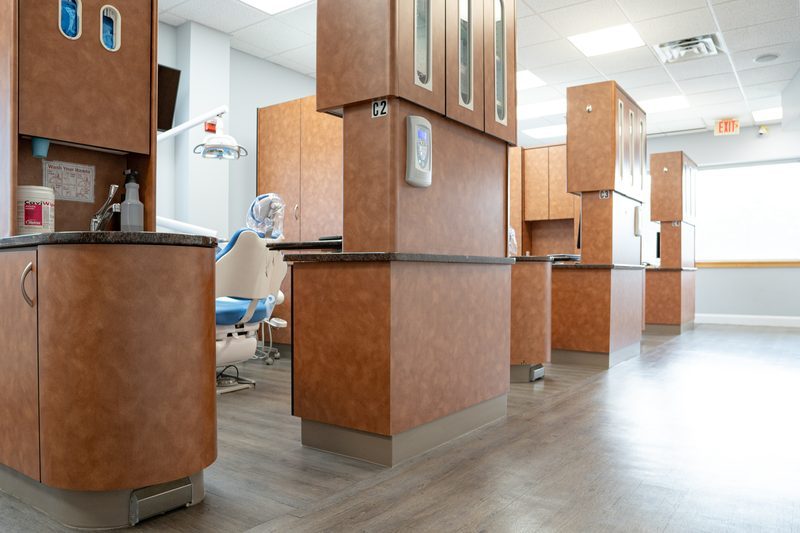
Why general dentists and specialists working in one building changes how a complex plan is coordinated.
Arpan Patel, D.M.D., practices in a 23 chair multispecialty dental office in Langhorne, Pennsylvania, and the way that office is organized is as much his work as any single case in it. General dentists and specialists share one building, and a patient whose treatment crosses several fields, an implant, a root canal, periodontal treatment, a bridge, can get most of it done under one roof, with the doctors on the case comparing notes in person rather than through referral letters.
Examinations, routine care and the appearance of the front teeth.
Placed and restored in the same building.
Treatment of the inside of a tooth so it can be kept.
Removal of teeth that cannot be saved.
Thin facings bonded to the front of teeth.
Fixed replacements for missing teeth, on teeth or on implants.
Care of the gums and the bone that hold teeth in place.
The difference shows up in the ordinary sequence of a complicated case. In a single specialty office each step below is a referral to another practice, a wait, and a letter back. Here it is a conversation in the corridor.
An examination, imaging, and a view of the whole mouth before any single problem is treated.
Where a tooth needs a root canal, an implant, or gum treatment, the specialist sees the patient in the same building and reads the same imaging.
The order of treatment is settled by the doctors involved, face to face, and the patient hears one plan rather than three.
The reasoning behind that arrangement was worked out early. From 2004 to 2011 Dr. Patel served as dental director of a multi provider practice in Fairless Hills, Pennsylvania, with 24 chairs and more than 25 people on staff. The job was half clinical and half organizational. He built the internal pathways that let a patient move from a general dentist to a specialist under the same roof, matched chairs and operatories to specialist availability and case complexity, and recruited and trained associate dentists, hygienists, assistants and treatment coordinators.
When he took on leadership of the Langhorne office in 2011, he chose to concentrate rather than spread out. Instead of a set of smaller satellite offices, the doctors, staff, specialties and equipment were gathered in one place where several clinicians could work the same case in the same building. That decision ran against the direction much of dentistry was taking at the time, and he describes it as inseparable from what his father, Dr. Nalin Patel, taught him about the job.
Coordinated care changes what a patient experiences in a specific way. A full arch reconstruction, for instance, involves surgical placement of implants, restorative planning and laboratory work over a period of months, and the questions that arise between those stages get answered by people who can walk down the hall to each other. The same holds for someone returning after years away who needs work in more than one specialty.
Not every case needs more than one specialty, and the model is not an argument against sending someone elsewhere when that is the right call. Its value is in the cases that would otherwise be split across three offices and three schedules, which are exactly the cases that stall.
Arpan Patel asks every clinician in the building to begin with a patient's general health and the condition of the mouth before any cosmetic question is raised, and to give an appointment's first four minutes to the person, with the teeth coming after. His D.M.D. is from the University of Pennsylvania School of Dental Medicine, class of 2004, and lower Bucks County has been his professional home since.
The full overview of his work is on the main site, and his own signature clinical work, full arch reconstruction, has a site of its own.